
AIR at Conviction 2026 in Ho Chi Minh City
AIR was at Conviction 2026, Vietnam's digital asset and AI economy forum, held at ThiskyHall Sala in Ho Chi Minh City on 14 and 15 August 2026. The programme ran across real-world asset tokenisation, cross-border stablecoin payments, digital asset regulation and sandbox policy design, with more than 80 speakers and over 210 partners taking part.
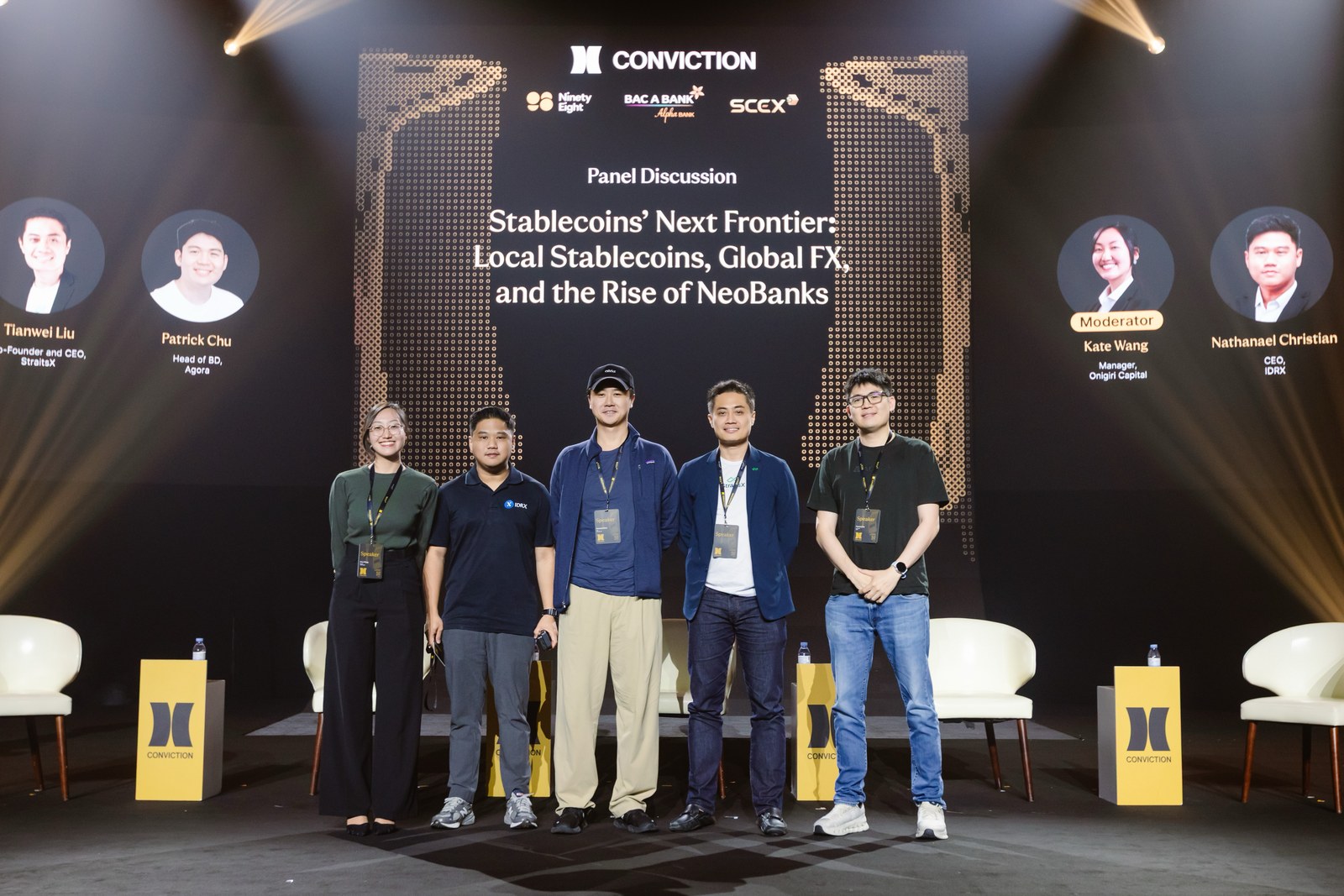
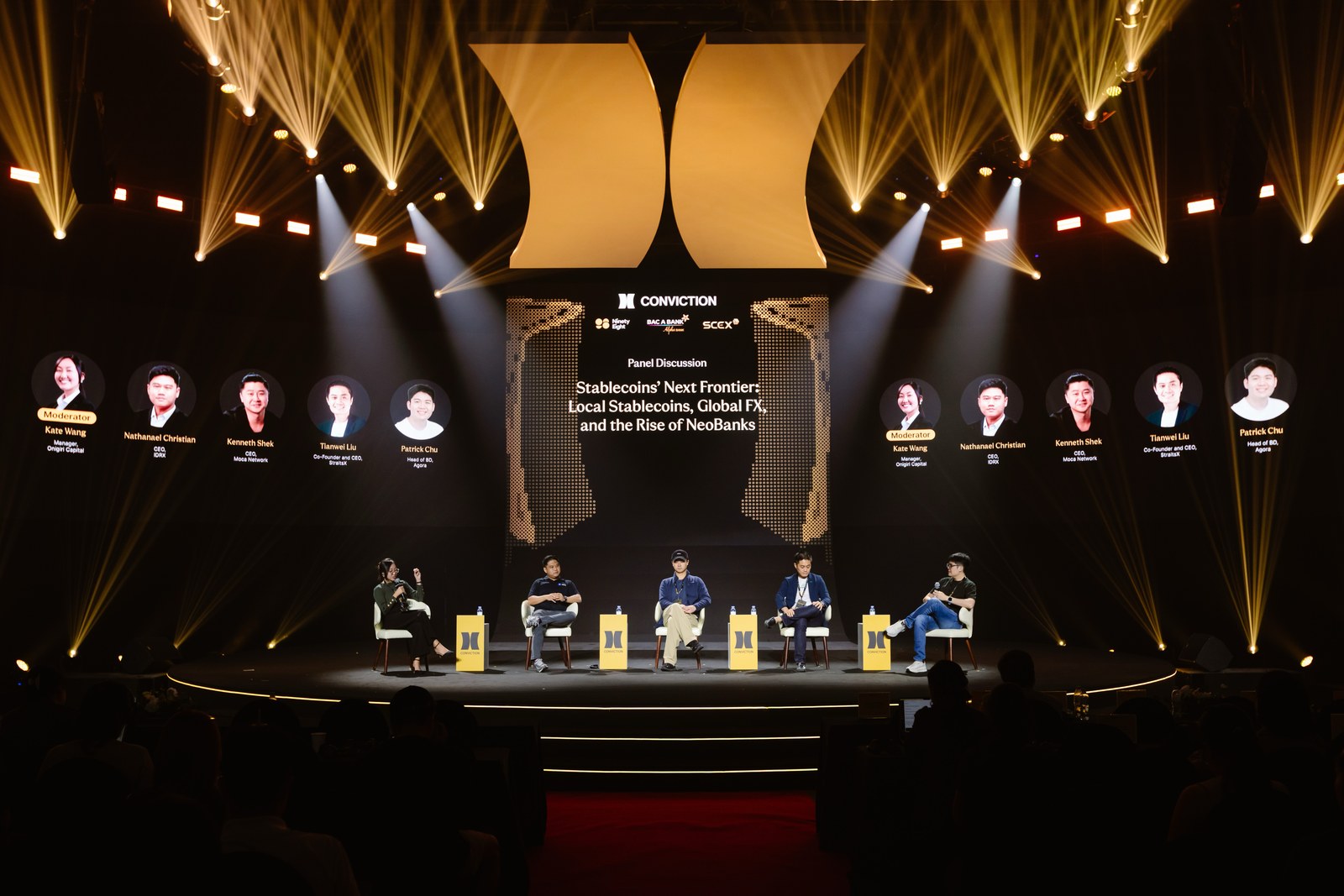
Kenneth Shek, CEO of Moca Network, joined the panel Stablecoins' Next Frontier: Local Stablecoins, Global FX, and the Rise of NeoBanks.
Why local stablecoins change the question
Most stablecoin discussion still assumes a single dollar-denominated instrument moving between two sophisticated counterparties. What is emerging across Southeast Asia looks different: locally denominated stablecoins, issued under domestic regulatory regimes, used for domestic settlement and then bridged outward through FX.
That shift moves the hard problem. When settlement was dollar-denominated and institutional, the counterparty was a licensed entity with a known legal identity. When it is local, retail and app-native, the counterparty is a person, and the system has to establish who that person is at the moment of the transaction rather than at the end of a month-long onboarding process.
The identity layer underneath the payment layer
Neobanks are where this becomes concrete. A neobank operating across several Southeast Asian markets faces a different onboarding regime in each one, and today it typically solves that by running a separate verification stack per market. Every new corridor adds another integration, another document store, and another population of users asked to prove the same facts again.
The alternative is to verify once and carry the result. A customer verified to a stated assurance level by a qualified issuer holds a credential they can present in the next market, and the receiving institution confirms the specific attribute it needs rather than collecting the underlying documents a second time. We looked at how that plays out in practice in reusable KYC in emerging markets, and at the two competing architectures for it in central KYC registry vs reusable credentials.
Where AIR fits
AIR Identity provides that portable verification: a partner confirms an attribute through a zero-knowledge proof without receiving the document or the personal data behind it. Paired with AIR Money for programmable settlement, a verified user can transact across markets without repeating enrolment in each one.
For a region where the growth constraint is often onboarding completion rather than demand, that is the difference between a corridor that scales and one that stalls at compliance.
More from AIR: AIR Identity, AIR Money, or browse the full AIR blog.
Partner with AIR
AIR is one integration suite for identity, money and loyalty. AIR Identity lets trusted issuers issue verifiable credentials and businesses verify them, so acquisition starts with users who already qualify, with minimal data custody. AIR Money embeds compliant global financial infrastructure, opening new markets without building new rails. AIR Loyalty gives brands a programmable, stable-value points engine that keeps users coming back.
Partner with us to grow your business.
AIR is built by Moca Network, the identity network of Animoca Brands.


.png)
.png)