How AI shopping agents rank products and choose a seller
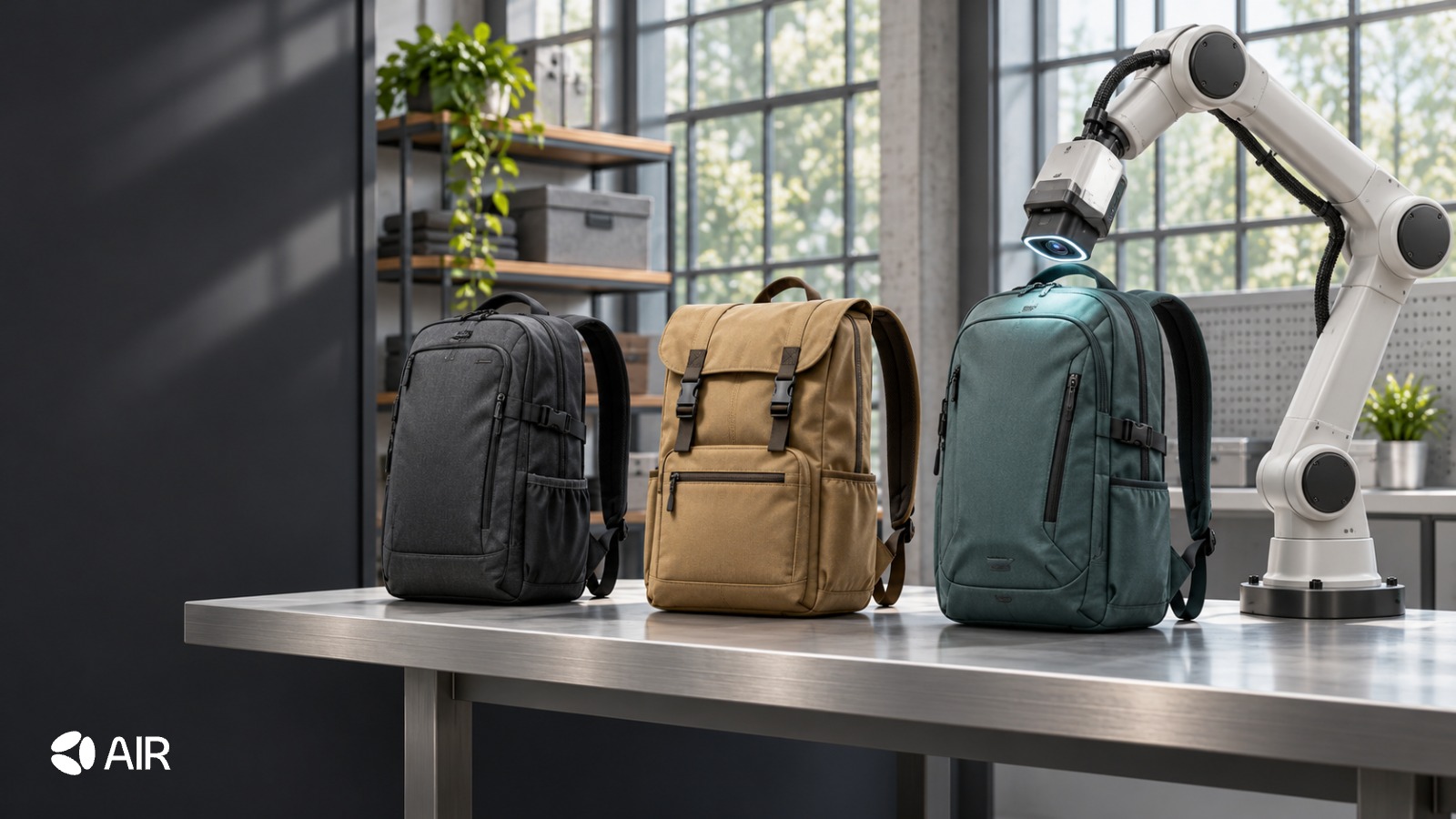
Ask a shopping assistant for a backpack for a rainy commute. Then add a price ceiling of $100. The same bag can move from first choice to absent from the answer. For a merchant, that raises a more useful question than “Where do we rank?” Which buying request do we win, against which competitor, and what changes the result?
AI shopping services make at least two decisions a merchant can observe. They select products that fit a request, and they may rank sellers offering the chosen product. Google and OpenAI describe several inputs to those decisions. The weight each input receives can change with the shopper’s instructions. A merchant can investigate both decisions without knowing the platform’s private scoring formula.
How does an AI shopping agent find products to compare?
On May 20, 2025, Google published an example of how it chooses products. When someone asks its AI Mode for a travel bag for a May trip to Portland, the system can run several related searches, a technique Google calls query fan-out. It investigates the conditions the traveler is likely to encounter, then uses criteria such as rain protection and pocket access to narrow the products it shows. A brand can miss this shortlist even when its page ranks well for “travel bag.” Google’s explanation of shopping in AI Mode.
For a backpack brand, the first move is to look up the questions customers ask before buying. Does the laptop sleeve fit their particular computer? Does the water resistance cover the zippers as well as the fabric? Put the measured sleeve dimensions and the scope of the water-resistance claim on the page for that exact model. A useful comparison page can explain which of your models suits a wet commute and why. Keep those answers in readable text, with the same specifications in your product feed. Google says pages cited as supporting links in AI Mode must be indexed and eligible for a search snippet. Google’s guidance on appearing in AI Search.
What gives one product an advantage over another?
The shopper’s wording can change the importance of price. In a controlled experiment revised on December 17, 2025, researchers presented three AI models with product lists as structured data. Under the default instruction, they estimated that a 10% price increase reduced the odds of a product being chosen by about 20%. When the models were told to ignore list position and prioritize price, the same increase reduced those odds by roughly 46% to 60%. These figures describe simulated choices. The researchers measured the odds of an agent picking an item in their test. Read the experimental results on price sensitivity.
The practical move is to benchmark against the rival that wins a specific request. Compare “lowest delivered price for a 16-inch laptop backpack” with “best backpack to keep a 16-inch laptop dry on a bike commute.” For the first request, calculate your delivered price alongside the competitor’s. For the second, inspect the evidence behind the recommended bag. If the assistant cites a rain test, check what the test established and whether your own product has comparable evidence. If the rival really performs better in the rain, the finding belongs with the product team. If your bag performed equally well and the result sits in an unlinked PDF, the first fix is editorial.
Reviews can enter the comparison as well. OpenAI says ChatGPT can summarize recurring themes from public product reviews. Look at the sources attached to a recommendation and check which model the reviewers used. A store-wide star average tells a shopper little about water getting through a particular zipper. OpenAI’s merchant feed distinguishes product review counts and ratings from store ratings. How ChatGPT uses product information and reviews. OpenAI’s product feed specification.
Once the product wins, how does the agent choose the seller?
Ask where to buy the exact backpack and the comparison changes. OpenAI lists price, availability, quality and whether the merchant is the maker or primary seller among the factors it uses to order merchants in ChatGPT. It also says the price on the initial product card can come from the first merchant listed. A cheaper seller may appear only after the shopper opens the product details. How ChatGPT ranks merchants offering the same item.
Check the exact variant your competitor wins with. Suppose your black 24-liter backpack is $89 plus $12 delivery. A rival sells the identical bag for $96 delivered. Your lower sticker price still leaves the shopper paying $5 more. Now suppose your loyalty members already receive free shipping. For an eligible customer, your $89 offer wins on delivered price. Test what the assistant can actually quote for a guest and a member before funding another discount.
Google Merchant Center supports product-level member shipping and pricing. The merchant still needs a way to recognize eligibility in the relevant channel. With AIR Agent, a shopper can authorize an agent to present proof of membership to a merchant that accepts it. That gives the merchant a basis for quoting the benefit it already funds. Google’s guide to member offers. How AIR Agent supports delegated identity.
Can advertising buy a recommendation?
Check the placement you are buying. On January 11, 2026, Google introduced Direct Offers as an advertising pilot that could show a labeled, sponsored discount in AI Mode. OpenAI says ChatGPT selects its shopping product results independently of ads. A paid placement can bring an offer into view, and a discount can improve its terms. Track paid appearances separately when assessing how often an assistant independently recommends your product. Google’s Direct Offers announcement. OpenAI’s shopping results policy.
How to test whether a competitor is outranking you
Choose one product, one direct competitor and one shopping assistant your customers use. Run three requests in fresh conversations, with the same location, timing and customer status. Repeat each request several times. Save the actual answers and the pages or product cards they reference.
- Test discovery. Ask “Which backpacks would you recommend for a rainy bike commute with a 16-inch laptop?” Leave both brand names out. Count how often each product appears on the shortlist.
- Test preference. Name both models and ask which fits that same commute better. Alternate the order of the two names across runs. Record which one wins, the reason given and whether the cited evidence supports it. Then change one requirement, such as the price ceiling, and see whether the preference changes.
- Test seller selection. Fill in the actual model, location and date. Ask “Which stores can deliver the black 24-liter [brand and model] to [postcode] by [date], and what is the total price?” Record the first seller, the quoted total and whether checkout honors it.
A brand that rarely appears in the first test but often wins the second has a concrete lead to investigate. Shoppers may struggle to discover a product that compares well once considered. If your product wins both tests and a different retailer wins the third, inspect the seller feed, stock and delivered price. On October 13, 2026, Bing added a Webmaster Tools report that surfaces search phrases where other sites earn citations and yours is absent. Those phrases help select the next test. The recommendation itself is what you measure. Bing’s guide to finding missed citation opportunities.
Change one thing, wait until the updated information is visible on the platform, and repeat the same requests. Keep the score for each decision by tracking how often your product appeared, how often it won head-to-head and how often your store supplied the winning offer. Those numbers give your content, pricing and commerce teams different jobs to do.
Platform documentation and product information checked November 11, 2026.
Frequently asked questions
How can a merchant tell whether its product is being recommended?
Run a category request that describes the customer’s need without naming your brand. Record the products the assistant recommends and the sources it cites. Then ask where to buy your exact model to see which retailers appear.
Does a lower price improve an AI shopping recommendation?
It can, particularly when the buyer prioritizes price. The effect varies by assistant and request. Compare equivalent variants and include shipping, mandatory charges and any discount the customer qualifies for.
Which product data should merchants update first?
Start with the information that decides a purchase in your category. For a commuter bag, that might be laptop sleeve dimensions and rain protection. Keep the model identifier, variant, price and stock consistent across the product page, catalog feed and checkout.
Can a brand pay to appear in an AI shopping answer?
Some platforms sell labeled placements in shopping conversations. Google introduced Direct Offers as a sponsored discount format. OpenAI says ChatGPT selects its shopping product results independently of advertising.
How can an AI shopping agent compare member prices?
The merchant needs to make the member offer available on the shopping channel and establish that the customer qualifies. With the customer’s permission, an agent can present membership evidence the merchant accepts. The merchant then calculates the eligible price.
Partner with AIR
AIR is one integration suite for identity, money and loyalty. AIR Identity lets trusted issuers issue verifiable credentials and businesses verify them, so acquisition starts with users who already qualify, with minimal data custody. AIR Money embeds compliant global financial infrastructure, opening new markets without building new rails. AIR Loyalty gives brands a programmable, stable-value points engine that keeps users coming back.
Partner with us to grow your business.
AIR is built by Moca Network, the identity network of Animoca Brands.