Agentic Payments in Airlines: Why Customer Identity Matters
For an airline, recognising the customer behind an artificial intelligence (AI) agent can enrich an offer with benefits from participating hotels, restaurants and other merchants. Relevant status evidence helps those businesses decide what the traveller qualifies for, with customer consent and each provider’s rules governing recognition.
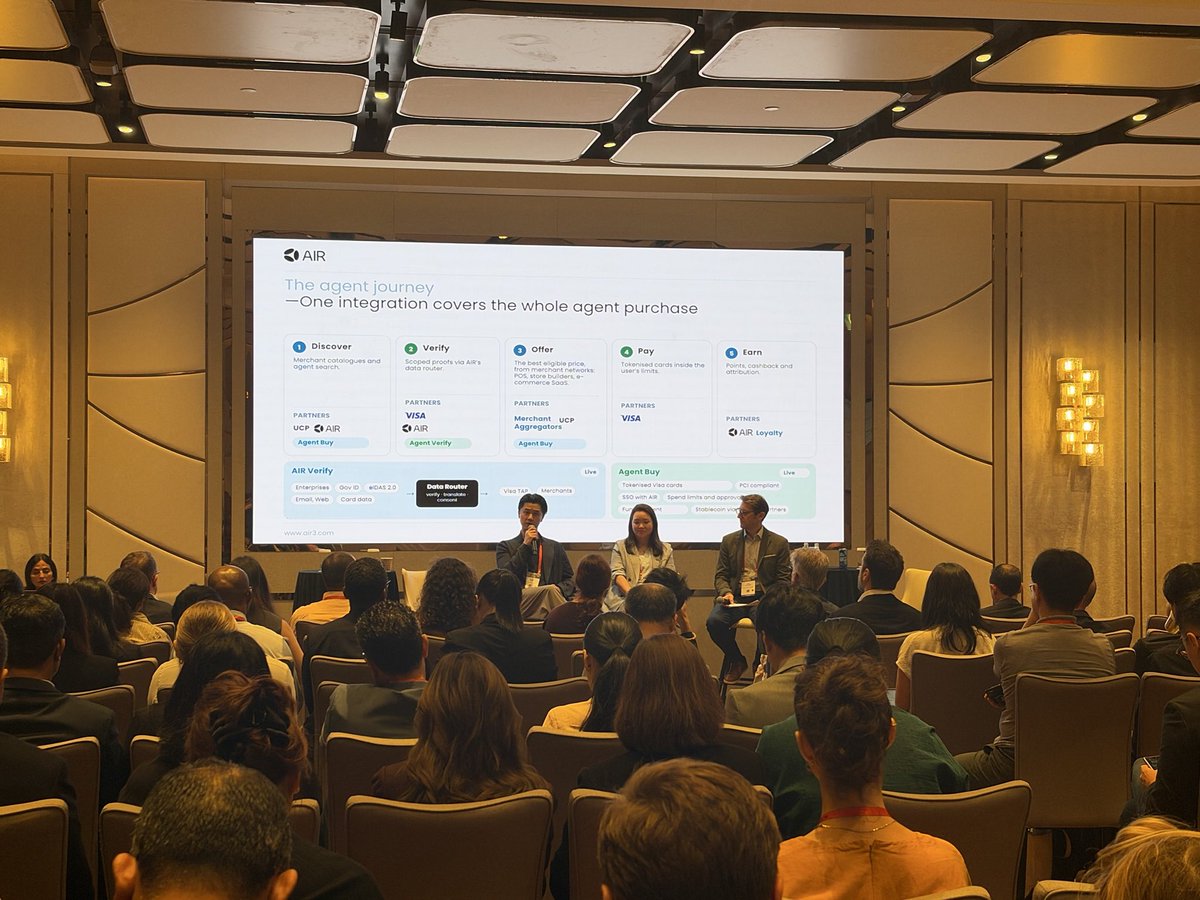
That wider customer relationship builds on AIR’s discussion with Visa at the IATA Payment Services Forum 2026 in Macao. An agent comparing flights needs context about the person it represents. The commercial opportunity extends beyond applying the airline’s own benefits: relevant partner services can also contribute to the trip the customer chooses.
What are Offers & Orders, and where do partner benefits fit?
IATA’s Offers & Orders approach separates the proposition presented before purchase from the booking accepted by the customer.
An offer describes the flight, services, price and conditions available to the traveller. Recognising status can affect which benefits belong in that proposition, including an airline’s baggage allowance or an eligible service from a participating partner.
An order records the accepted booking for fulfilment and servicing. IATA’s ONE Order standard aims to consolidate information held in separate airline booking and ticketing records. A hotel or restaurant may retain its own reservation, terms and payment process. Bringing its benefit into a wider travel proposition still requires the participating businesses’ commercial arrangements and booking integrations.
What does IATA’s research tell us about this direction?
IATA’s October 2026 study of 19 IT-provider companies ranked legacy-free Offer Management first for perceived value, Product Management joint second with channel modernisation, Order Management third and O&O Partnerships fourth. These are provider assessments, not measured revenue gains or passenger preferences.
The report’s framework connects these areas to dynamic bundles, a wider choice of relevant products and partnerships covering interline and non-air services. These are illustrative value mechanisms rather than results from particular airline programmes.
For an airline adding hotel and dining options, the implication is commercial: a broader catalogue only improves the proposition if businesses can identify which options and benefits fit this customer. Status evidence helps participating providers make that decision before a booking, under their own rules.

How can airline status enrich a hotel or dining offer?
Consider an illustrative trip where participating businesses have agreed the benefit terms and connected their booking systems. An airline member asks an assistant to compare a flight and a two-night hotel stay. Their airline membership includes a checked bag on the selected flight. A participating hotel has also agreed to include breakfast for qualifying members who book an eligible room rate. A participating restaurant offers those members a dining benefit on selected dates.
If the assistant sees only public prices, the hotel stay may appear to exclude breakfast and the dining benefit may never enter the comparison. With the traveller’s permission, evidence of current airline status can be presented to the hotel and restaurant. Each checks whether the customer meets its conditions before returning the applicable offer.
The airline’s relationship now contributes value beyond the flight. The hotel gains a way to recognise a qualifying visitor, and the restaurant can make a relevant proposition for the same trip. The customer receives a clearer comparison of the services and benefits actually available to them. The decision still depends on the customer’s preferences, location, dates and total cost.
How does AIR Identity support recognition across businesses?
Airlines invest in acquiring customers and building loyalty. Status that participating businesses can recognise gives that investment a wider role in the customer’s journey. It also creates a basis for partners to engage people who already meet relevant criteria.
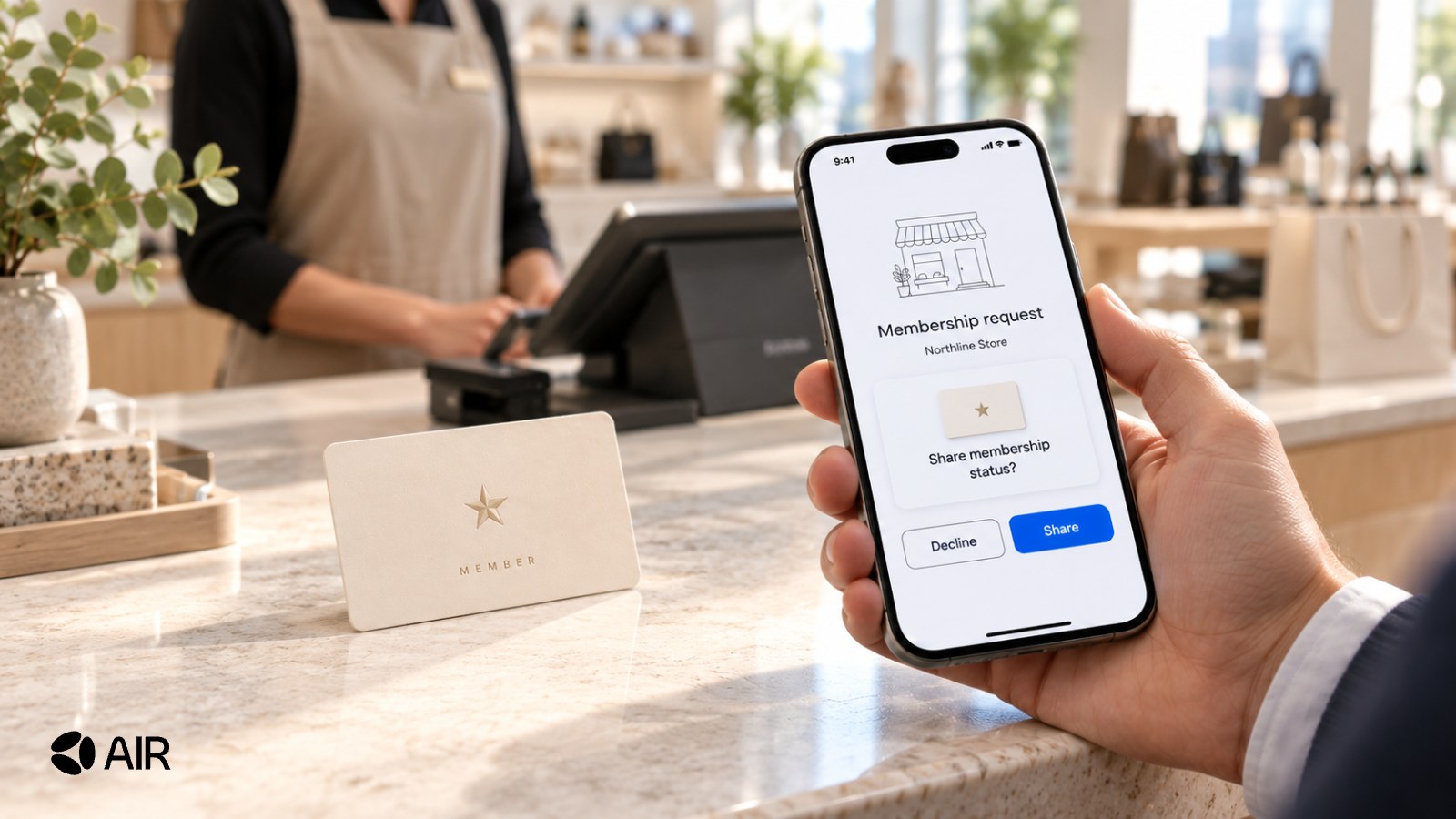
With AIR Identity, trusted issuers issue reusable, user-held credentials, and businesses verify proofs of the attributes they need. An airline can issue a credential through AIR based on status in its own programme. The airline remains the source of that status; the hotel decides whether to accept the proof for its breakfast offer. The customer controls whether to share it.
AIR’s Travel & Loyalty page describes status-recognition use cases between airlines, hotels, car rentals, lounges, restaurants and experiences. The commercial terms of a particular benefit remain a separate agreement.
Recognition can work in the other direction too. An airline could choose to accept evidence from a participating hotel programme when presenting an offer to a qualifying guest. That gives it a way to reach an audience whose relevant status is already established elsewhere. The airline defines the offer and accepted evidence; reciprocal recognition does not mean every programme must match every other programme’s benefits.
What changes when an AI agent presents the proof?
With AIR Agent, customers can authorise assistants to present relevant identity and membership evidence within defined limits. In the hotel example, the permitted proof gives the provider a basis for evaluating breakfast eligibility while the assistant compares options.
The provider still needs to authenticate the incoming agent request. Permission to share status is separate from authority to book the hotel or pay for dinner. The agent’s purchase must fit the traveller’s instructions, and payment remains subject to the payment provider’s checks. Our membership-at-checkout guide explains this distinction.
AIR Identity supports eligibility evidence. The airline and its partners retain responsibility for creating offers, booking and delivering services, managing changes and arranging payment. If the hotel dates change, the hotel must reassess its breakfast terms. If the traveller cancels the flight, any linked partner benefit needs to follow the conditions agreed for that offer.
Key takeaways
- Airline status can support relevant offers from participating businesses beyond the airline’s own services.
- Recognition can also help an airline reach qualifying members of partner programmes.
- Evidence, customer permission and accepted benefit rules connect the opportunity; fulfilment and payment require the participating arrangements.
The opportunity is to make the airline’s customer relationship useful across more of the journey. Customer identity provides a basis for recognising relevant status, while each business retains control over the value it offers and the services it delivers.
Frequently asked questions
How can airline membership support benefits outside the airline?
A participating business can accept evidence of airline status and apply its own offer rules. The customer shares the required proof with permission; the benefit depends on eligibility and the participating arrangement.
Does AIR issue the airline’s membership status?
The airline establishes status in its programme and can issue a reusable credential through AIR Identity. Participating businesses verify the relevant proof and decide whether it meets their criteria.
Can airlines recognise members of partner programmes?
Yes, where participating arrangements support it. An airline can accept evidence from a trusted partner issuer and apply an offer to customers who meet its own eligibility rules.
Does Offers & Orders put every partner service into one booking?
No. Offers & Orders describes offer creation and accepted booking records. Services from other providers still need appropriate commercial arrangements, integrations, fulfilment and payment processes.
Does membership proof authorise an AI agent to pay?
No. Membership evidence supports eligibility. The agent separately needs the customer’s authority for the purchase, and the payment must pass the payment provider’s checks.
Sources
- Moca Network · IATA session recap · 28 October 2026.
- IATA · Readiness and Roadmap to 100% Offers & Orders: Through the lens of IT providers · October 2026, pages 3 and 13–15.
- IATA · Airline Retailing and ONE Order · checked 3 November 2026.
AIR is built by Moca Network, the identity network of Animoca Brands.
Partner with AIR
AIR is one integration suite for identity, money and loyalty. AIR Identity lets trusted issuers issue verifiable credentials and businesses verify them, so acquisition starts with users who already qualify, with minimal data custody. AIR Money embeds compliant global financial infrastructure, opening new markets without building new rails. AIR Loyalty gives brands a programmable, stable-value points engine that keeps users coming back.
Partner with us to grow your business.
AIR is built by Moca Network, the identity network of Animoca Brands.